
Toothtabs.co.uk
Tiny tabs. Big clean. No tube.
Toothpaste tablets explained properly — practical guides, honest comparisons and simple routes to buy.
What are toothpaste tablets?
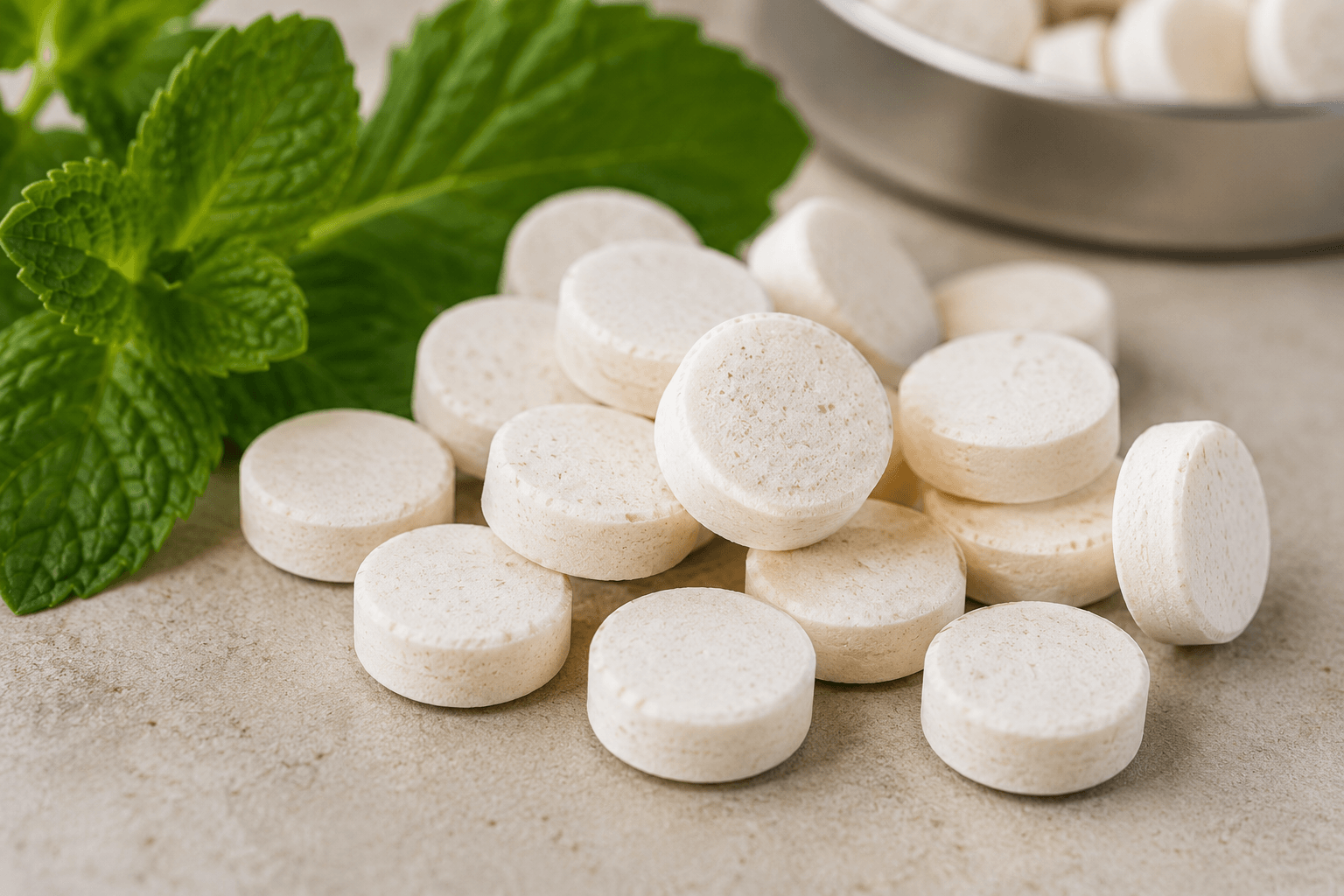
Toothpaste tablets are small, dry tablets used instead of toothpaste from a tube. You chew one tablet, let it mix with saliva, then brush your teeth as normal.
A tiny tablet that turns into toothpaste when you brush.
A toothpaste tablet is a pre-measured tooth-cleaning tablet. Instead of squeezing paste onto your brush, you place one tablet in your mouth, chew it, and then brush with a wet or dry toothbrush depending on your preference.
Once the tablet mixes with saliva, it breaks down into a brushable texture. It will not usually feel exactly like standard toothpaste, especially if you are used to lots of foam, but the job is familiar: brush your teeth properly, spit out, and carry on with your day.
Why do toothpaste tablets exist?
Because normal toothpaste works, but the tube format is not exactly elegant. Tablets take the useful bit — cleaning your teeth — and remove a lot of the packaging and paste faff around it.
They reduce tube waste
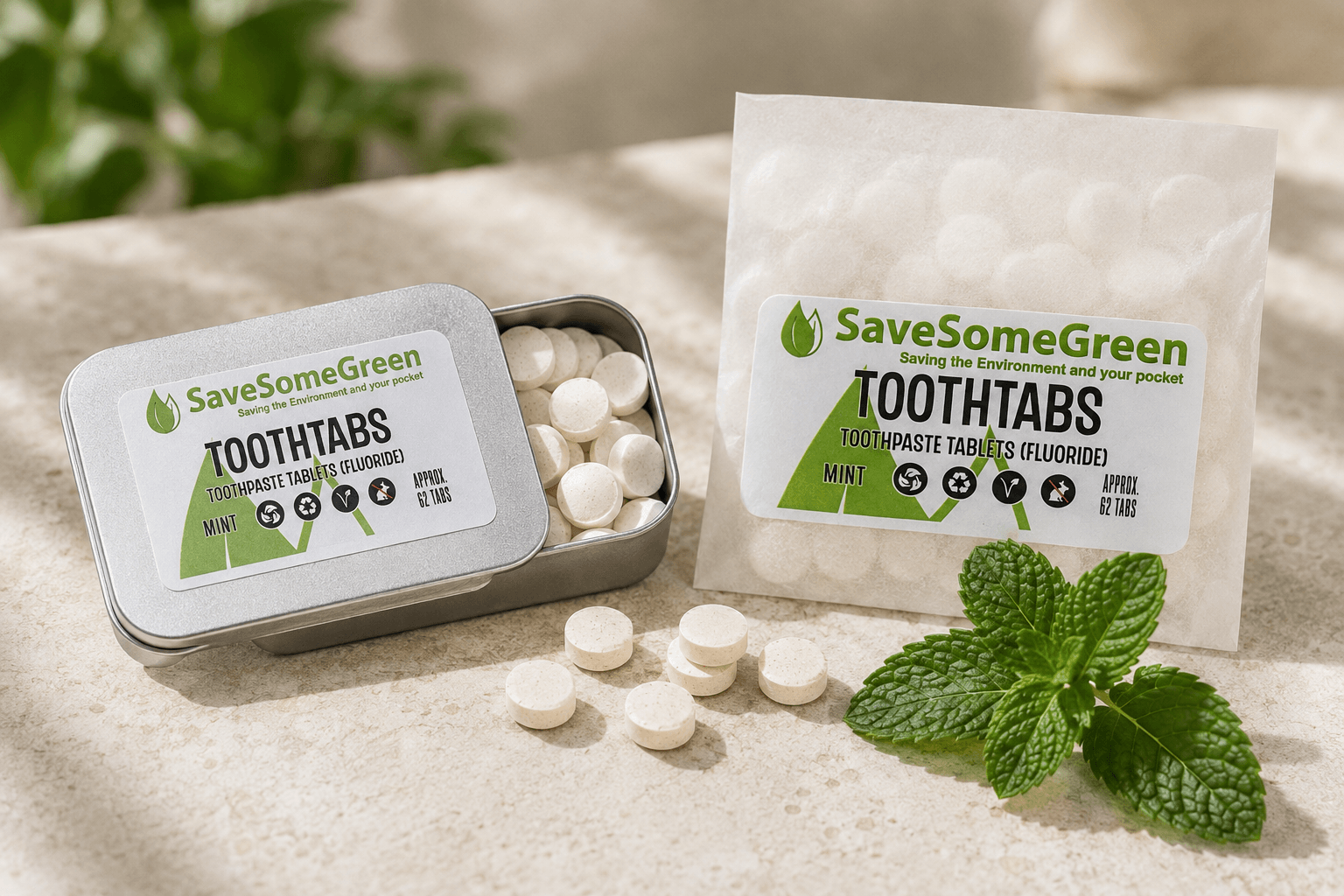
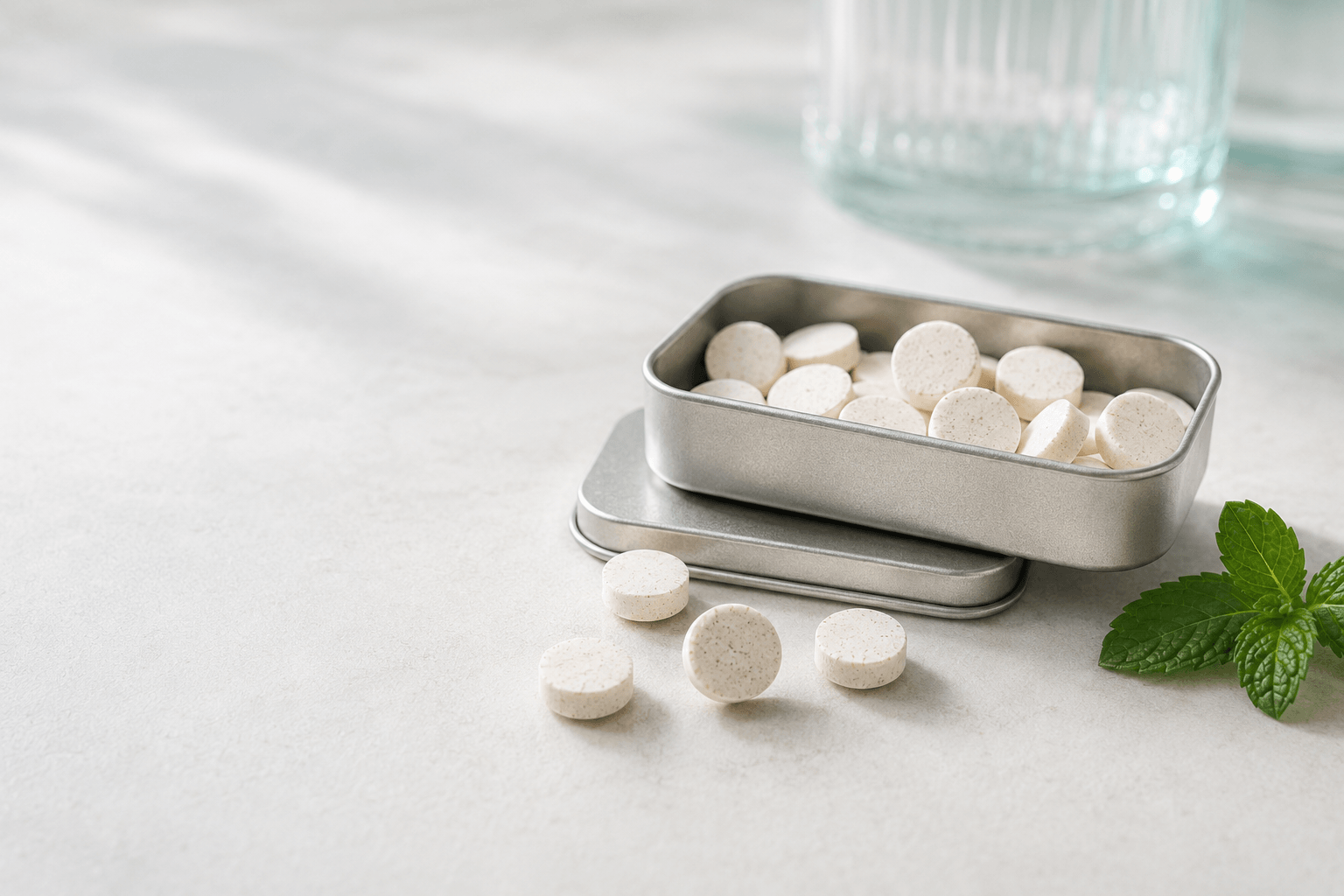
Toothpaste tablets avoid the normal squeezy tube format. Use a reusable tin, then refill it when you need more.
They are dry and compact
Tablets are concentrated and water-free in use until they meet your mouth. That makes them easier to store, post, pack and portion.
They are pre-measured
One tablet is one brush. No over-squeezing, no accidental mountain of paste, no wrestling the last bit out of a tired tube.
They are practical for travel
Solid tablets are easy to put in a tin for holidays, festivals, camping, the gym or work. No gloop. No burst tube. Much less drama.
Are toothpaste tablets the same as toothpaste?
They are not identical in texture, but they are meant to do the same everyday job: help you brush your teeth.
| Question | Toothpaste tablets | Normal toothpaste |
|---|---|---|
| How do you use it? | Chew one tablet, then brush. | Squeeze paste onto a brush, then brush. |
| How is it stored? | In a tin, jar or refill container. Keep it dry. | In a tube, usually with a plastic cap. |
| Does it foam? | Usually less foamy. The clean feeling is often smoother rather than frothier. | Usually foamier, because that is what most people are used to. |
| Is it good for travel? | Yes. Solid, compact and easy to portion. | Fine, but bulkier and more likely to leak or count as a paste/liquid when travelling. |
| What is the main appeal? | Less packaging, less mess, easy refills and simple portion control. | Familiar, widely available and no habit change needed. |
They feel different at first. That does not mean they are wrong.
The first time you use a toothpaste tablet, your mouth may have a small “what is this tiny chalky sorcery?” moment. That is normal. You are switching from a soft paste to a dry tablet that breaks down as you chew.
The main difference is foam. Lots of people associate foam with cleaning, but foam is mostly a familiar feeling. Toothpaste tablets are usually less foamy and more compact, so the brushing experience can feel calmer and cleaner once you get used to it.
Less foam
Tablets usually do not puff up like very foamy toothpaste. That is expected.
More control
Each tablet is a tidy measured portion, which makes the routine simple.
Keep them dry
The one rule: do not let the whole batch sit in damp air or wet fingers.
Who are toothpaste tablets good for?
They are especially useful if you want a lower-waste bathroom swap that still feels practical in normal life.
Plastic-reducing households
If you are cutting down repeat plastic packaging, toothpaste tablets are one of the easier bathroom swaps.
Travellers and campers
They are compact, solid and easy to count out before you leave. Excellent for people who dislike toothpaste explosions in wash bags.
Refill and zero-waste shoppers
If you already refill soaps, cleaners or pantry goods, refill toothpaste tablets fit the same sensible pattern.
Families, shops and wholesale buyers
Once you know tablets work for you, bigger packs make much more sense than buying tiny amounts again and again.
Toothpaste tablets can come with fluoride or without it.
Some people want fluoride toothpaste tablets because they want the familiar dental-care ingredient in a lower-waste format. Other people specifically choose fluoride-free products for their own reasons.
Toothtabs are available in both fluoride and fluoride-free options, so the switch to tablets does not have to mean giving up the version you prefer.
Useful rule of thumb
If you currently use fluoride toothpaste and want the closest lower-waste swap, start by looking at fluoride toothpaste tablets. If you already choose fluoride-free dental products, choose the fluoride-free version instead.
Common questions
The sensible questions people ask before putting a tiny tooth tablet in their mouth.
Are toothpaste tablets real toothpaste?
They are a toothpaste alternative designed for brushing your teeth. The format is different, but the routine is still chew, brush and clean your teeth properly.
Do toothpaste tablets clean properly?
They are designed to clean teeth when used correctly with a toothbrush. The key is not just the tablet; it is also brushing thoroughly and consistently.
Why do toothpaste tablets not foam as much?
Many tablets are made to be less foamy than normal toothpaste. Foam feels familiar, but it is not the only sign that brushing is happening.
Do I need to wet my toothbrush?
You can. Some people prefer a wet brush, some chew the tablet first and then brush. Try both and use the method that feels better.
How many toothpaste tablets should I use?
Usually one tablet per brushing session. That is one of the useful things about them: the portion is already sorted.
Where can I buy Toothtabs?
You can buy Toothtabs through Save Some Green in tins, refills, fluoride and fluoride-free options, plus larger bulk and wholesale choices.
Ready to try toothpaste tablets?
Start with a tin, refill what you already have, or go straight for a bigger supply if you already know the tube has had its day.